
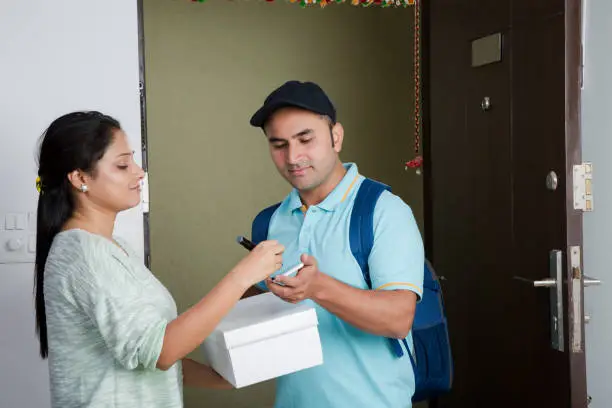
Proof of delivery is only as good as what it proves. A signature shows that someone signed. A photo shows that a package was somewhere. A PIN shows that someone had a code. None of these, alone, shows that the right person received the right item. This article explains what each method of delivery verification proves, what it leaves open, how to match the method to the risk, and how to keep the personal information it generates under control.
Quick answer
- Each verification method proves something different: a signature proves a person signed, a photo proves a place and a time, a PIN proves possession of a code, and an ID check proves identity at the door.
- Match the method to what is at stake. A time-stamped photo can be enough for supplies, while a legal original or a regulated item may call for a named recipient, a signature, and an ID check.
- Proof at pickup matters as much as proof at delivery. Record the number of pieces and the condition when the shipment is handed over.
- Verification creates personal information. Collect only what you need, and agree how long delivery records are kept.
What Each Method Proves
| Method | What it proves | What it leaves open |
|---|---|---|
| Signature with printed name and time | A person acknowledged receipt, at a recorded time | Whether that person was the intended recipient, unless the name is checked against the order |
| Named-recipient-only delivery | That the shipment went to the person you named, not to a desk | Whether the person was who they said they were, unless ID is checked |
| ID check | That the person at the door matched the identification shown | Nothing about the item's condition, and the check itself should be recorded without copying more than needed |
| Photo of the shipment at the destination | That the item was at a place at a time | Who received it, and whether it stayed there |
| Photo of the signed document or handover | A visual record of the exchange | The photo shows what the camera saw, not what was inside the package |
| PIN or one-time code | That the person receiving it had a code shared in advance | Whether the code was passed on to someone else |
| Time and location stamps | When and where the delivery was recorded | Whether the recorded person was the right one |
Matching the Method to the Risk
| Level of risk | Typical contents | Reasonable verification |
|---|---|---|
| Low | Supplies, non-sensitive parcels | A photo at the destination, with time and location stamps |
| Medium | Business documents, equipment, routine medical supplies | A signature with a printed name, matched to the order |
| High | Legal originals, confidential files, specimens, regulated items | A named recipient, a signature, and an ID check |
| Critical | Irreplaceable originals, controlled or high-value items | All of the above, plus a PIN shared separately and a photo of the handover |
For the matching chain-of-custody records, see our guide to chain of custody.
The Pickup Counts Too
Many disputes start at the pickup, not the delivery. A short record at handover prevents most of them.
- The number of pieces, and a quick note of the condition of the packaging.
- Seal numbers, if the shipment is sealed. Our article on tamper-evident packaging explains how to use them.
- The name of the person who handed it over, and the time.
- Anything unusual, such as a damaged box or a missing label.
Privacy: Verification Creates Personal Information
A signature, a photo of a person at a door, and an ID check are all personal information. Québec's private-sector privacy law applies to personal information handled in the course of business, as explained in our guide to Law 25 and courier delivery. Practical habits that fit that approach:
- Check identification visually where possible, and record only what you need, such as the type of document and the fact that it was checked.
- Do not copy or photograph identification numbers unless there is a real need.
- Avoid photos that capture bystanders, or the contents of a document.
- Agree with the courier how long delivery records are kept, and who can see them.
- Put the arrangement in writing for sensitive deliveries.
When Things Do Not Go to Plan
- The named recipient is not there. Decide in advance whether the courier should wait, call, hold the item, or deliver to an alternate named person.
- The recipient refuses to sign. Canada Post says its Xpresspost Certified document service returns the item to the sender in that case. Ask any courier what its procedure is.
- The building's security desk offers to accept. Say in the instructions whether that is allowed.
- The ID does not match. The courier should not hand over the item, and should call the contact you gave.
How to Specify Verification When You Book
- Name the recipient and say whether anyone else may sign.
- Say whether an ID check is required, and what the courier should record.
- Say whether a photo is wanted, and of what.
- Share any PIN separately from the booking, with the recipient only.
- Say what should happen if the recipient is unavailable.
- Ask when and how you will receive the proof.
Reading a Proof of Delivery
When the record arrives, check that the name matches the order, the time and location make sense, the signature is legible, the number of pieces matches, and any condition notes are recorded. A proof that looks wrong is much easier to raise the same day than a week later. If something is damaged or missing, see our claims guide.
Frequently Asked Questions
Is a photo of the package at the door proof of delivery?
It proves the item was at a place at a time. It does not show who received it or whether it stayed there. For anything sensitive, add a signature from a named recipient.
Should a courier copy or photograph the recipient's ID?
Usually a visual check is enough, with a note that it was done. Copying identification increases the amount of personal information you hold. Decide in advance what needs to be recorded, and ask the courier what it does.
What is a PIN delivery?
The recipient receives a code separately from the booking and gives it to the driver at the door. It adds confidence that the right person is receiving the item, as long as the code is shared only with them.
What happens if the named recipient is not available?
That depends on your instructions. You can ask the courier to wait, call a contact, hold the item, or deliver to an alternate named person. Say which in advance.
How long should delivery records be kept?
Long enough to resolve a dispute, and no longer than you need. Agree the period with your courier, and with your own privacy lead if you have one.
Prove What Matters, Collect Only What You Need
The right verification is the one that proves what you will later need to prove, and no more. Match it to the risk, record the pickup as carefully as the delivery, and handle the personal information that verification creates as carefully as the shipment itself.
Rush Expedited Courier provides proof of delivery, and dispatch runs around the clock. Say which verification your delivery needs in the quote form; the full list of our courier services is one click away.
Sources and Further Reading
- LégisQuébec: Act respecting the protection of personal information in the private sector (P-39.1)
- Canada Post: domestic parcel services overview