
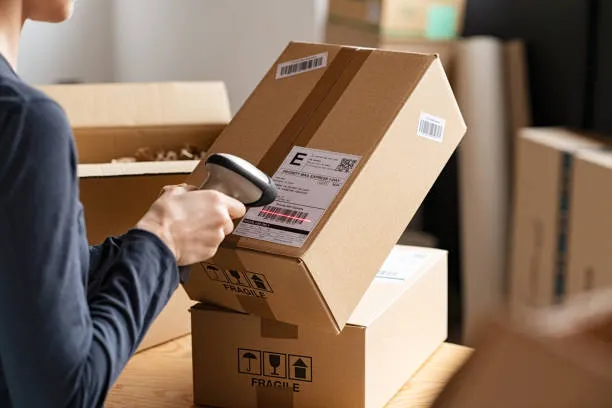
When a hard drive, a USB key, or a phone holds the evidence, the courier is carrying the matter itself. What counts is not only that the device arrives, but that everyone can show it arrived unchanged: sealed, accounted for, and passed from one signature to the next. This guide explains how lawyers, litigation-support teams, and examiners can set that up for a courier delivery, in terms that do not require a technical background.
Quick answer
- Treat the media as the evidence. The courier's role is to keep it sealed, unaltered, and accounted for between two signatures.
- Record a hash value, which works like a digital fingerprint, before shipping, so the recipient can confirm the files did not change.
- Send the password separately, never in the box and never on the label.
- Use serial-numbered tamper-evident seals and a custody form that every handoff signs.
What Counts as Storage Media in a Legal Matter
- External hard drives and solid-state drives.
- USB keys and memory cards.
- Laptops, phones, and tablets collected for review.
- Forensic images stored on drives.
- Document productions delivered on drives or discs during discovery.
- Surveillance or recording footage on removable media.
The same handling principles apply to all of them, though the packaging and battery considerations differ.
Why Integrity Is the Whole Point
Québec's Act to establish a legal framework for information technology states that the integrity of a document is ensured if it is possible to verify that the information it contains has not been altered. It also provides that when information is transferred to another medium and the source is destroyed, the transfer must be documented so that preservation of the information and its integrity can be shown. Those provisions are written for documents in general, and they do not tell you how to handle a given item in a given case. Your lawyer and your examiner decide that.
What they do show is the logic that governs electronic evidence in practice: you want to be able to verify that nothing changed, and to show how the item travelled. Hash values answer the first need. Custody records answer the second.
Hash Values in Plain Language
A hash value is a short string of characters calculated from the contents of a file or a whole drive image. If even one bit changes, the value changes. It is a digital fingerprint. A courier does not calculate it, but everyone who handles the evidence benefits from it.
| Step | Who does it | What happens |
|---|---|---|
| Calculate the hash | The sender or the examiner | A value is generated from the files or the image before shipping |
| Record it | The sender | The value is written on the custody form and sent separately from the media |
| Ship the media sealed | The courier | The package stays sealed, travels without stops that are not needed, and is signed for at each end |
| Recalculate | The recipient | The same method is run on receipt |
| Compare and note | The recipient | If the values match, that is documented. If they differ, the sender is told immediately |
Packaging Digital Media
| Media | Main hazard in transit | Packing approach |
|---|---|---|
| Hard disk drives | Shock and vibration | Rigid case or box with foam on all sides, marked fragile |
| Solid-state drives and USB keys | Static discharge and bending | Anti-static bag inside a rigid container |
| Phones, tablets, and laptops | Battery issues, damage, and unintended changes if powered on | Follow the examiner's instructions, including any signal-blocking bag they supply, and tell the courier a battery is present, see our dangerous goods guide |
| Optical discs | Scratches and cracking | Individual sleeves in a rigid case |
| Memory cards | Loss because of their size | Sealed bag, placed in a labelled container, and counted at every handoff |
Passwords, Encryption, and the Label
- Encrypt the media when the matter calls for it, following your examiner's or firm's practice.
- Send the password to a named person through a different channel, and never in the box or on the label.
- Use a matter number on the outside, not a client name or a description of the content.
- Do not ask the courier to know what is on the drive. The courier needs handling instructions, not contents.
The Custody Form: What It Should Capture
- A description of each item: make, model, and serial number.
- The number of items and the seal serial numbers.
- A reference to the hash values, kept separately.
- Who released the items, with date and time.
- Who received them, with date and time.
- The condition on receipt, including whether each seal was intact.
- Signatures at every handoff, with printed names.
Our overview of chain of custody in courier delivery explains how handoff records work in general. The form above adds the digital-media specifics.
Inspect the Seal Before You Open the Package
- Compare the seal's serial number with the number on the custody form.
- Photograph the package and the seal before opening.
- If the seal is missing, altered, or different, stop and call the sender before opening.
- Open the package, check each item against the list, and record the condition.
- Run the hash comparison, and sign and date the form.
Direct, Dedicated, or Onboard?
| Option | Best for | Note |
|---|---|---|
| Direct run | A single package that must arrive quickly | No unrelated stops, one pickup, one delivery |
| Dedicated vehicle | Several items, or media that needs more space and protection | Nothing else shares the cargo area |
| Onboard courier | The most sensitive items, or when an irreplaceable device cannot leave anyone's hands | The courier stays with the item from pickup to handoff, see our onboard courier guide |
| Shared route | Routine, non-sensitive paperwork | Not a fit for evidence |
Some buildings screen packages at the entrance. Tell the recipient that a courier is bringing storage media, so the screening does not catch anyone off guard.
Frequently Asked Questions
Does the courier need to know what is on the drive?
No. The courier needs to know how to handle the package: fragile, sealed, signature required, and any battery information. Contents and case details should stay off the label and out of the booking.
Should the password go in the package?
No. Send it to a named person through a different channel, so that a lost or intercepted package does not give access to the data. Never write it on the label or on the custody form that travels with the media.
What is a hash value, and who calculates it?
It is a digital fingerprint of a file or a drive image. The sender or an examiner calculates it before shipping, and the recipient recalculates it on receipt. If the two match, the files are unchanged. The courier does not calculate it.
Can a courier deliver a phone or laptop that holds evidence?
Yes, as long as the examiner's handling instructions are followed and the courier is told that a battery is present. Ask the examiner whether the device should be powered off and whether a signal-blocking bag is required.
What should we do if the seal is broken on arrival?
Stop before opening, photograph the package and the seal, and call the sender. Record what you found on the custody form. Do not open it and carry on as if nothing happened, and do not ask the courier to explain what happened to the seal beyond what the delivery record shows.
Evidence Is Only as Good as Its Handoffs
Electronic evidence travels well when the process around it is boring: a hash value recorded, a numbered seal applied, a form signed at each end, and a password sent somewhere else. The courier's part is to keep the package sealed and to leave a clear record of every handoff.
Rush Expedited Courier moves sensitive legal materials with tamper-evident packaging, proof of delivery, and an onboard option for items that must not leave anyone's hands. Describe your delivery through the quote form, or learn more about our legal courier service.
Sources and Further Reading
- LégisQuébec: Act to establish a legal framework for information technology (C-1.1)
- Transport Canada: Transporting batteries